
Veterans & Smoking: The War on Healthy Living

Veterans & Smoking: The War on Healthy Living
In recent years, attention has been brought to the quality of life veterans experience after serving our country. Unemployment and mental health have held the spotlight in those discussions, but an important underlying issue lies in tobacco use.
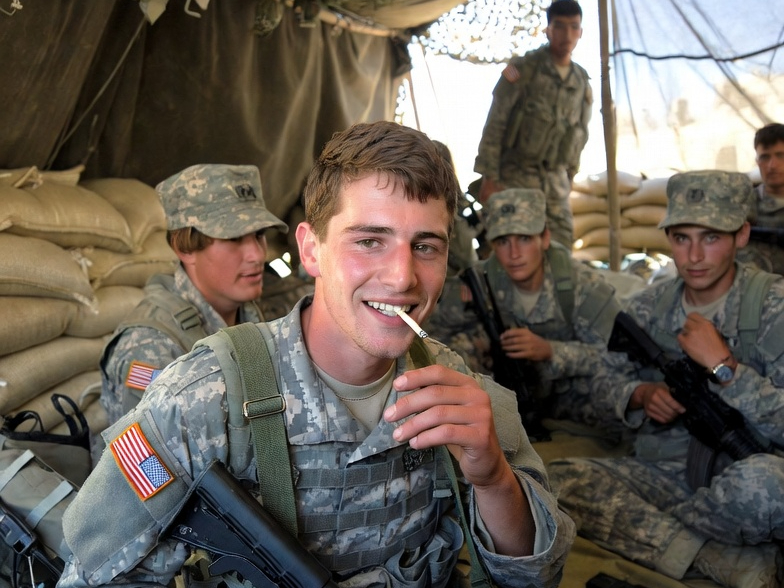
Fighting a Losing Battle
Despite the strength and willpower many veterans develop through their service, they are still susceptible to succumbing to cigarette addiction. A habit that starts as a way to alleviate the psychological stresses of war may ultimately bring many veterans pain and suffering they do not deserve. American citizens have a duty to look after those who have served, and part of that is seeing to their health.
The Constant Pressure
While in service, members of our military face a barrage of pressures from their fellow troops and the military itself. Cigarettes are given as an award for accomplishments and discounted at military stores. One can argue that 18-year-old recruits are still young enough to succumb to the peer pressure that results from witnessing superior officers smoke.
As explained by many Iraq War veterans: when you have nothing to do for hours at a time, smoking cigarettes becomes a very appealing way to kill time. The boredom may end with the tour of duty, but the nicotine addiction follows veterans home.

Coming to Terms
Sooner or later, many veteran smokers begin to notice how heavily they’ve smoked. Most veterans will admit that smoking is endemic in the military, and most want to quit. However, quitting can be a battle: one that almost no one can win alone.
Many soldiers feel attached to the structured breaks smoking creates. Some also feel their addiction is strengthened by other mental issues. The government pays $1.6 billion annually in servicemen’s medical expenses related to smoking. Reducing tobacco dependence in the military would decrease this number on a long-term scale.
Smoking has killed 10 times more U.S. citizens than all of the wars the U.S. has ever fought combined. Quitting can be a challenge, but as a society, we have an ethical obligation to help our veterans and all smokers beat addiction. Approximately 77% of veterans who try to quit fail: a frightening statistic, but with support, that number can decrease.

There are Solutions
The Veterans Affairs office offers counseling to all veterans in addition to a fully dedicated anti-smoking hotline. Veterans who deal with PTSD and depression can use what they learn through therapy to fight addiction. Many techniques used to suppress the urge to smoke can also be used to help control PTSD as well. The VA’s programs seek to return mental stability to the lives of returning veterans. With this stability, cigarette addiction may soon fade.
More Ammo for Success
Additionally, Congress is seeking to pass legislation to restrict smoking in the military. Curbing the accessibility of cigarettes will go a long way in preventing new members of the military from falling into the trap of addiction. Further, many veterans feel that their tobacco addiction was a direct result of military service, and therefore, nicotine replacement therapy aids that have shown proven results should be provided by the V.A. as tools for smoking cessation.
Elevate Your Content Strategy Today
Access the industry's most powerful content production dashboard and partner with America's premier content writing service.
Sign Up For Free Join 500+ brands and agencies scaling with human-crafted excellence.